On arrival at Indore airport / railway station you will be transferred to the hotel in Indore. Rest of the day is at leisure to explore the city on your own. To begin the pilgrim tourist circuit of Madhya Pradesh tourism, Indore is the best place to launch it. As it is a pilgrimage tour, so avoid carrying leather items with you as many temples often restricts carrying such items. Similarly do photography where it is allowed and prefer wearing sandals over shoes as often you have to remove them before entering into temples. Overnight at the hotel in Indore.
Day 02: Indore
Enjoy city tour of Indore. There are many tourist attractions in this city like temples, Gomatgiri, Kanch Mandir, Khajrana, Town Hall, Gita Bhavan, Chhatris, Annapurna and Central Museum etc. Overnight at the hotel in Indore.
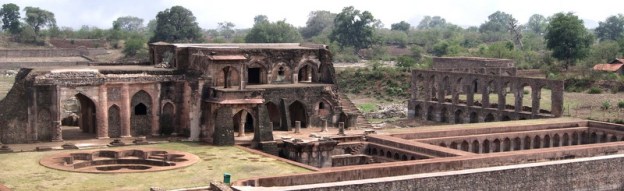
Drive to Mandu where you will visit Jahaj Mahal, Jami Masjid, Bajbahadur Palace and Rani Roopmati Pavalion. Return back to Indore in the evening. Overnight at the hotel in Indore.
Proceed to visit Mahakaleshwar Mandir, Bade Ganeshji Ka Mandir, Kal Bhairav Shrine, Pir Matsyendranath, and Radha Madan Mohan Temple. After Sightseeing Proceed to Ujjain. Overnight at the hotel in Ujjain.
Drive to Bhopal. Enjoy city tour of Bhopal that includes Taj-Ul-Masjid, Shaukat Mahal & Sadar Manzil, Salkanpur, Bharat Bhawan, Indira Gandhi Rashtriya Manav Sangrahalaya, Laxmi Narayan Temple & Museum, Upper & Lower Lakes. In the evening, check in the Hotel. Overnight at the hotel in Bhopal.
Today proceed to visit Bhimbetka – archaeological treasures in the form of cave paintings that reveal the life story of pre-historic cave dwellers in India. After the Visit to Bhimbetka, visit Sanchi Stupa – a UNESCO World Heritage site. Overnight at the hotel in Bhopal.
Day 08: Depart Bhopal
This morning you will be transferred to Bhopal airport/ railway station to board your flight/train back home or to your next destination.
Day 01: Arrive in Jabalpur – Excursion to Bhedaghat (Approx. 27 Kms / 1 hour)
On arrival at Jabalpur Airport / Railway Station you will be transferred to the hotel in Jabalpur. The original settlement in this area was ancient Tripuri and the rulers of this city, the Hayahaya, are mentioned in the Mahabharata. It passed successively into Mauryan and then Gupta control until, in 875 AD, it was taken by the Kalchuri rulers. Later enjoy a day excursion at Bhedaghat. Soaring in glittering splendour, the Marble Rocks at Bhedaghat rise to a hundred feet on either side of the Narmada. The serene loveliness of the scene is one of cool quiet, the sunlight sparkling on the marble-white pinnacles and casting dappled shadows on the pellucid waters. These white rocks with views of black and dark green volcanic seams are truly majestic, and produce a magical effect on moonlit nights. The holy river flows by tranquilly flanked by the towering cliffs which reflect in it like a mirror the changing moods of nature. A little distance away, it becomes turbulent as it plunges in a mighty water fall known as Dhuandhar. Overnight at the hotel in Jabalpur.
Drive to Khajuraho. The Khajuraho temples were built about 35 miles from the medieval city of Mahoba,the capital of Chandela dynasty, in Kalinjar region. In ancient and medieval literature, their kingdom has been called Jijhoti, Jejahoti, Chih-chi-to and Jejakabhukti. Khajuraho were mentioned by Abu Rihan-al-Biruni, the Arabic historian who accompanied Mahmud of Ghazni in his raid of Kalinjar in 1022 CE; he mentions Khajuraho as the capital of Jajahuti. The raid was unsuccessful, and a peace accord was reached when the Hindu king agreed to pay a ransom to Mahmud of Ghazni to end the attack and leave. Overnight at the hotel in Khajuraho.
Day 03: Fullday at Khajuraho
Proceed to indulge yourself in the sensual temples of Khajuraho. The architectural style of the Khajuraho temples is very different from the temple prototype of that period. Each stands, instead of within the customary enclosure, on a high masonry platform. Combined with the upward direction of the structure, which is further accentuated by vertical projections, the total effect is one of grace and lightness, reminiscent of the Himalayan peaks. Each of the chief compartments has its own roof, grouped in such a way that the highest is in the centre, the lowest over the portico, a triumph of skill and imagination in recreating the rising peaks of a range. The temples of Khajuraho are divided into three geographical groups: Western, Eastern and Southern. Overnight at the hotel in Khajuraho.
Day 04: Excursion to Panna National Park
Today, proceed to Panna National Park near the Ken River with its deep gorges, tranquil valley and dense teak forests. The region, famous for its diamond industry, is also home to some of the best wildlife species. If you are lucky, you could sight tigers and panthers along with herds of chinkara, sambar and several other wildlife species. The spectacular Pandav Falls en route and other waterfalls in the area are popular picnic spots. The rest of the day is at leisure to explore the local shops and market. Overnight at the hotel in Khajuraho.
Drive to Orchha. Orchha is a heritage town lost in time set on Betwa river at 15 kms from Jhansi. Fot is an attraction here. One crosses over on a footbridge for a leisurely walk. The fort consists of several connected buildings erected at different times (Raja Mahal & Jahangir Mahal). Chaturbhuj Temple is an old temple from the 9th century. Numerous cenotaphs or chhatris dot the vicinity of the fort and the Betwa river. Elsewhere about the town there is an unusual variety of temples and tombs. Overnight at the hotel in Orchha.
Day 06: Fullday at Orchha
This morning you will proceed to visit the famous Raj Mahal and Jahangir Mahal. The Rajmandir – built on a square base has plain external with projecting windows. The Jahangir Mahal, built to welcome the Mughal emperor Jahangir is the magnificent example of Hindu structural design. The other attractions include the Raj Mahal, The Sheesh Mahal, the Chaturbhuj temple. Along with these there are numerous Chhatris of royals or cenotaphs dotting the banks of the river Betwa. Overnight at the hotel in Orchha.
Proceed to Gwalior. The entire city is a visual and aesthetic feast, for the builders of Gwalior were great architects. Take a walk through the streets of the city and you will discover old havelis with exquisitely carved doorways and windows; at almost every street crossing you will find statues of the Scindia family. Evening is at leisure. Overnight at the hotel in Gwalior.
Day 08: Wholeday at Gwalior
Enjoy tour of Gwalior’s local sightseeing. Some of the places of interests are Gwalior Fort, Sas Bahu Temples, Suraj Kund, Jas Vilas Palace, Man Singh and Gwalior State Archaeological Museum. Sightseeing in Gwalior is a magical trip into the centuries gone by. Museums and art galleries are treasure houses and beautifully maintained palaces give the city its inimitable regal flavour. Overnight at the hotel in Gwalior.
Day 09: Depart from Gwalior
This morning you will be transferred to Gwalior airport / railway station for your flight / train back home or your next destination.
On arrival at Jabalpur airport / railway station you will be transferred to the hotel in Jabalpur. The original settlement in this area was ancient Tripuri and the rulers of this city, the Hayahaya, are mentioned in the Mahabharata.It passed successively into Mauryan and then Gupta control until, in 875 AD, it was taken by the Kalchuri rulers. Overnight at the hotel in Jabalpur.
Day 02: Excursion to Bhedaghat (Approx. 27 Kms / 55 mins)
Enjoy a day excursion to Bhedaghat. Bhedaghat : Soaring in glittering splendour, the Marble Rocks at Bhedaghat rise to a hundred feet on either side of the Narmada. The serene loveliness of the scene is one of cool quiet, the sunlight sparkling on the marble- white pinnacles and casting dappled shadows on the pellucid waters. These white rocks with views of black and dark green volcanic seams are truly majestic, and produce a magical effect on moonlit nights. The holy river flows by tranquilly flanked by the towering cliffs which reflect in it like a mirror the changing moods of nature. A little distance away, it becomes turbulent as it plunges in a mighty water fall known as Dhuandhar. Overnight at the hotel in Jabalpur.
Day 03: Jabalpur – Bandhavgarh (Approx. 195 Kms/ 5 hours)
This morning you will transferred to the wild locales of Bandhavgarh. Prior to becoming a National park, the forest around Bandhavgarh had long been maintained as a Shikargah, or game preserve, of the Maharajahs of Rewa. Hunting was carried out by the Maharajahs and their guests – otherwise the wildlife was relatively well- protected. It was considered a good omen for a Maharajah of Rewa to shoot 109 Tigers. His highness Maharajah Venkat Raman Singh shot 111 Tigers by 1914. Afternoon is at leisure. Evening you can take a small nature walk (on your own expense) wherein our experts shall take you for a nature trail in the surrounding areas. Overnight at the resort in Bandhavgarh.
Day 04: Bandhavgarh National Park
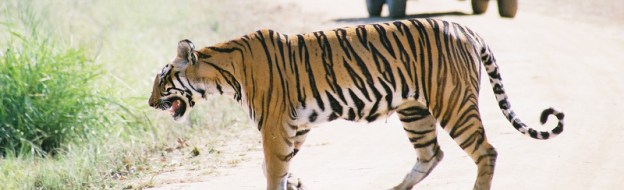
Today enjoy two wildlife safaris (on your own) in the Premium zone of the park. Enjoy a early morning and post lunch Safari .Each Safari take approximately 2 hours 30 minutes to 3 hours. The Safaris are done in open gypsies and each gypsy has a driver and a naturalist as per the park regulations. Apart from its fame, the Bengal Tiger, other commonly seen animals in the park include the spotted deer, sambar, barking deer, the four-horned deer, fox, hyena, jungle cat, civets, wolf, porcupine, honey badger and hares. Gaur can be sighted near the water holes. Reptiles like pythons, cobras, krait, rat snakes, vipers, keelbacks and grass snakes are nocturnal animals, and are therefore rarely seen. There are many species of turtles as well as amphibians found in or near the water bodies along with a number of migratory birds. Enjoy the safaris, click lots of images and experience the wilderness of Bandhavgarh. Overnight at the resort in Bandhavgarh.
Drive to Kanha. Kanha is virtually a tiger land, with several tigresses occupying traditionally famous natal areas. There is a rich assemblage of co-predators and prey animals. Perhaps the most precious animal of Kanha is the Central Indian Barasingha. This Swamp deer is the last world population of the species. The lush sal and bamboo forests, grassy meadows and ravines of Kanha provided inspiration to Rudyard Kipling for his famous novel “Jungle Book”! Check in at the resort and relax. Evening you can take a small nature walk (on your own expense) wherein our experts shall take you for a nature trail in the surrounding areas. Overnight at the resort in Kanha.
Day 06: Kanha National Park
Today you can enjoy two wildlife safaris (on your own) in the Premium zone of the park.One early morning and one post lunch.Each Safari takes approximately 2 hours 30 minutes to 3 hours. The Safaris are done in open gypsies and each gypsy has a driver and a naturalist as per the park regulations. Apart from its fame, the Bengal Tiger, other commonly seen animals in the park include the spotted deer, sambar, barking deer, the four-horned deer, fox, hyena, jungle cat, civets, porcupine, honey badger and hares. Gaur can be sighted near the water holes. Reptiles like pythons, cobras, krait, rat snakes, vipers, keelbacks and grass snakes are nocturnal animals, and are therefore rarely seen. There are many species of turtles as well as amphibians found in or near the water bodies along with a number of migratory birds. Enjoy the safaris, click lots of images and experience the wilderness of Kanha.Overnight at the resort in Kanha.
Day 07: Depart Kanha
This morning you will be transferred to Jabalpur airport / railway station for your flight / train back home or your next destination.
On arrival at Bhopal Airport/ Pipariya railway station you will be transferred to the hotel in Pachmarhi. Pachmarhi is the only hill station of Madhya Pradesh and is renowned for its heritage hotels built in the colonial style and its beautiful climate all round the year. Overnight at the hotel in Pachmarhi.
Day 02: Pachmarhi
Enjoy a full day sightseeing tour of Pachmarhi. Visit Pandav Caves, Bee Fall-Waterfall, Christ Church, Jata Shankar Temple, Apsara Vihar and Reenchgarh. In the evening, witness a beautiful sunset at the Sunset Point. Overnight at the hotel in Pachmarhi.
Day 03: Pachmarhi
The days is at leisure. Folks who love to experience an adrenaline rush, may opt for adventurous activities like paragliding. In the afternoon, visit Handi Khoh, Bada Mahadev and Gupt Mahadev. Overnight at the hotel in Pachmarhi.
Day 04: Pachmarhi – Bandhavgarh (Approx. 414 Kms / 8 hours 15 mins
Drive to Bandhavgarh National Park, which is renowned for being a park that offers best tiger sightings and therefore excellent for photography. The Park also offers wide range of flora and fauna and good for bird watching in winter. Overnight at the hotel in Bandhavgarh.
Day 05: Bandhavgarh National Park
Enjoy a morning and evening Jeep Safari in Bandhavgarh National Park (On your own). Elephant back Tiger Tracking (on your own) can be availed if organized on the day of the travel. Overnight at the hotel in Bandhavgarh.
Today you will proceed to Jabalpur. It is known for its rugged marble rocks standing along a river. The beautiful gorge is 3 km long and offers breath-taking sights, which you can also see while boating. Visit the beautiful Dhuandhar Waterfalls later along with a visit to the temple on the hilltop, which is reachable via cable car. Overnight at the hotel in Jabalpur.
Day 07: Depart Jabalpur
This morning you will be transferred to Jabalpur airport / railway station for your flight / train back home or your next destination.




 Incredible India